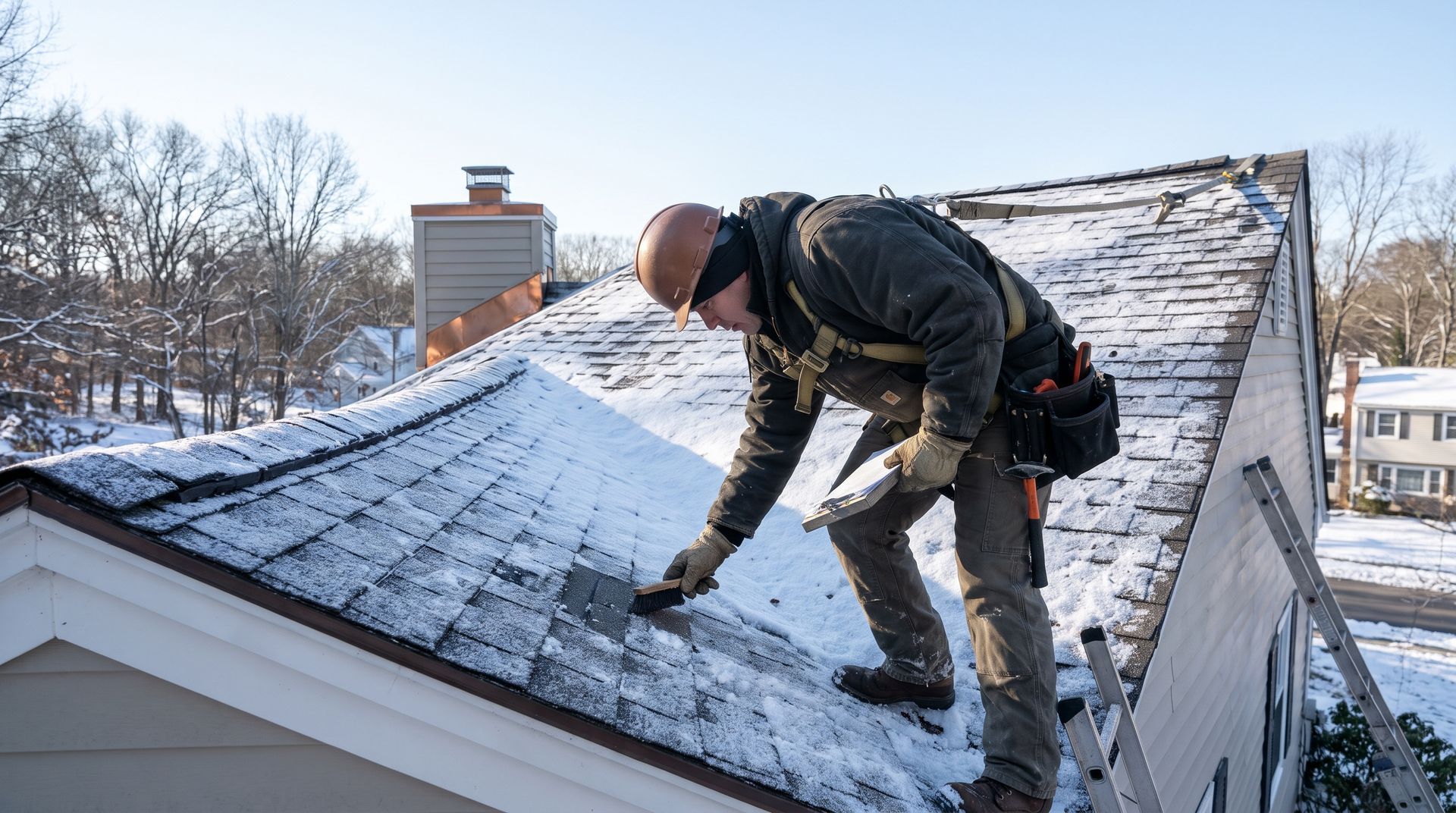


Can Clogged Gutters Cause Roof Leaks? What Happens When Water Backs Up
Best Way Roofing has repaired roofs and installed gutters across Central Connecticut for more than 15 years from our base in Wolcott. We are a GAF Master Elite contractor and a 2026 GAF Master Elite President's Club award winner, registered under HIC #0634957. Many of the "roof leaks" we are called out for turn out to start at the gutter line, not in the shingles. This guide explains how clogged gutters cause leaks, how to tell a gutter problem from a roof problem, and what to do about it.
Quick Answer: Yes, clogged gutters can cause leaks, but usually not the way most people imagine. On a sloped shingle roof, rainwater rarely climbs back up under the shingles. Instead, it overflows behind the gutter, soaking the roof edge, fascia, and soffit, and can run into walls and around windows. In winter, clogged gutters freeze and help ice dams form, and ice dams can push water under shingles and into your ceilings. The leak may show up inside, but the cause is the clog.
In This Guide
- Where the Water Goes When Gutters Clog: The real leak paths.
- Gutter Leak or Roof Leak?: How to tell the difference.
- Damage Clogged Gutters Cause: Beyond the stain.
- Clogged Gutters and Ice Dams: The winter connection.
- What Clogs Gutters in Central CT: Local culprits and timing.
- What to Do About Clogged Gutters: Cleaning and checks.
- When It Is More Than a Clog: Signs of real damage.
- Preventing Gutter-Related Leaks: Long-term fixes.
- Get Your Roof and Gutters Checked: Free inspections.
- Frequently Asked Questions: Quick answers.
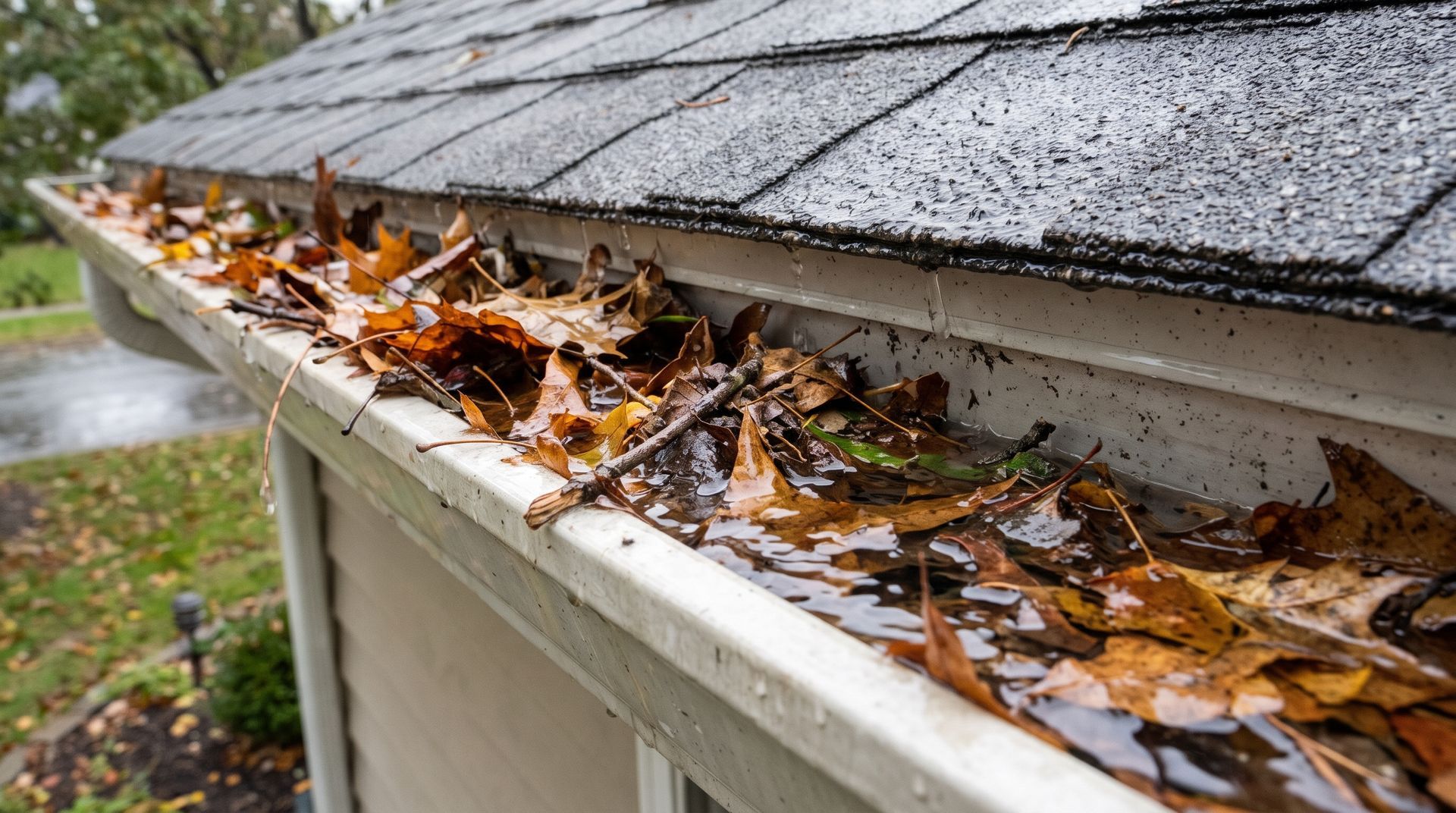
Where the Water Goes When Gutters Clog
How much damage an overflow does depends mostly on two details at the roof edge: whether drip edge flashing laps down into the gutter, and how high the gutter hangs on the fascia.
Over the Front Lip
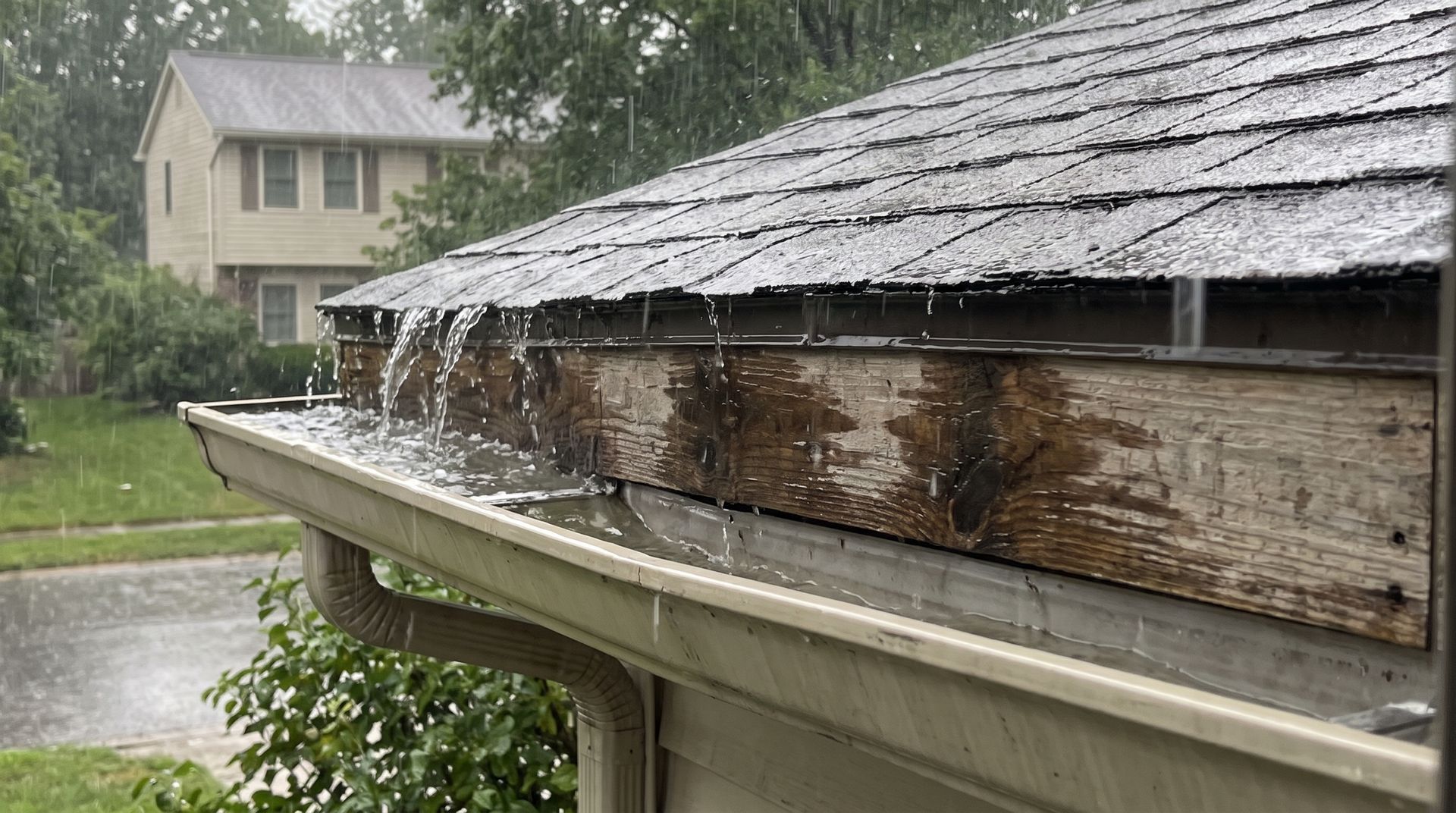
The most visible result is water sheeting over the front of the gutter. That alone is usually not a leak. It soaks landscaping, splashes siding, and pools near the foundation, but it stays outside the house.
Behind the Gutter
This is where most gutter-related leaks start. When a gutter is full, water rises to the back of the trough and spills into the gap between the gutter and the fascia board. If the roof edge is missing drip edge flashing, or the drip edge does not extend into the gutter, water runs down behind the gutter. It soaks the fascia, the bottom edge of the roof decking, and the soffit.
Into the Soffit and Walls
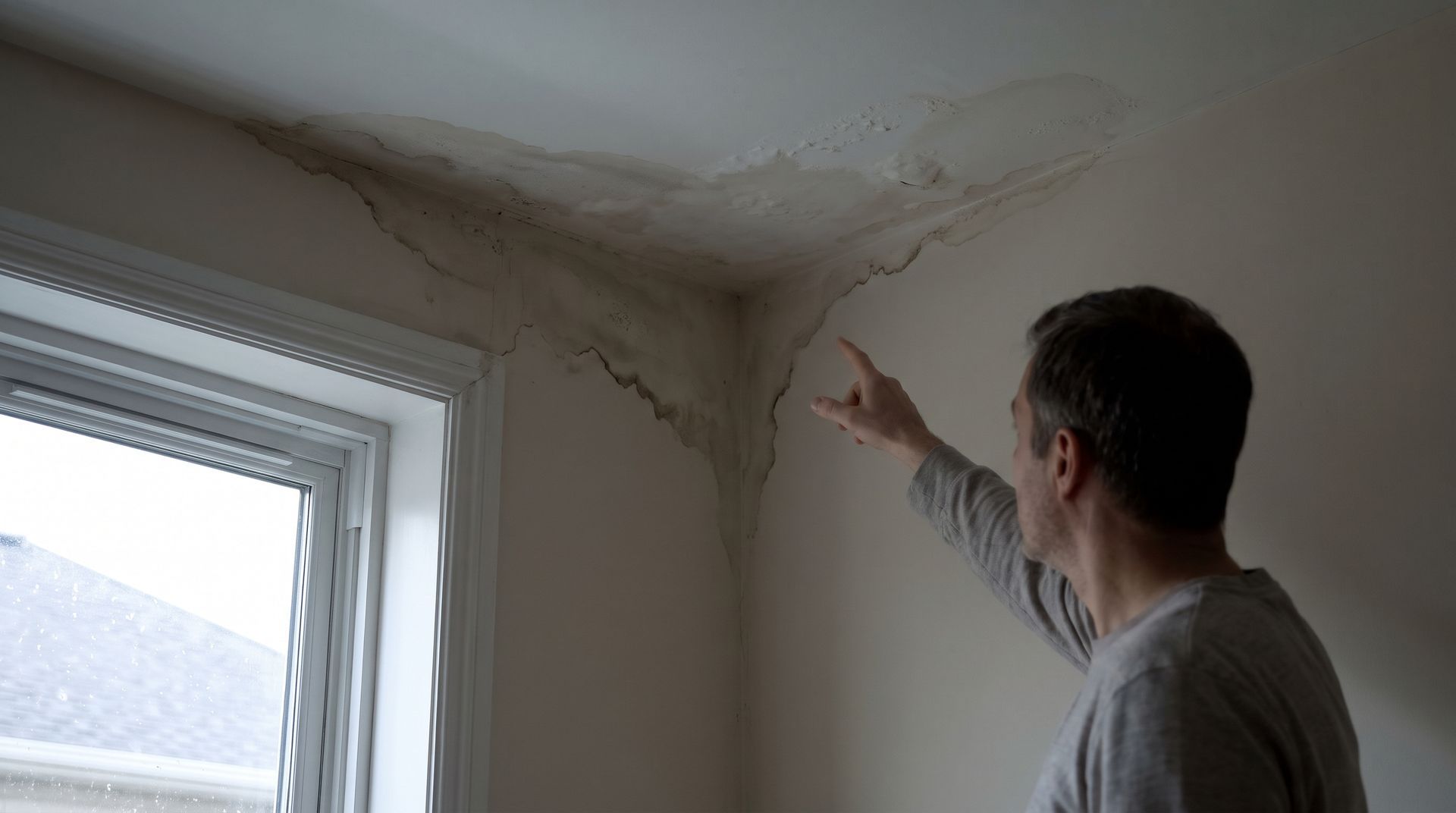
Once water is behind the gutter, it can find its way into the soffit and down inside the top of the exterior wall. It often shows up indoors at the top of a wall, around a window head, or on the ceiling right next to an exterior wall. That is why a gutter problem is so easy to mistake for a roof leak.
Under the Shingles
In a summer rainstorm, water rarely pushes up under properly installed shingles from a clogged gutter. It can happen when gutters are mounted too high on the fascia, on very low-slope roof edges, or when debris builds up on the roof itself. The bigger risk of water getting under shingles comes in winter, when ice is involved.
Signs Your Gutters Are Overflowing
Overflow leaves marks you can spot from the ground, even on a dry day:
- Dirty stripes or water lines on the siding directly below the gutters.
- A trench in the mulch or soil along the drip line where water pours off.
- Water dripping from behind the gutter, not just over the front edge.
- Plants or seedlings growing out of the gutter.
- Dark stains or peeling paint on the fascia and soffit.
- Icicles hanging from the back of the gutter in winter, a sign water is getting behind it.
Gutter Leak or Roof Leak? How to Tell the Difference
Water from a gutter problem enters at the eaves, so it almost always shows up within a few feet of an exterior wall. A true roof leak follows rafters and decking downhill and can surface anywhere in a room.
| Where You See Water | Likely Source | What It Usually Means |
|---|---|---|
| Ceiling along an exterior wall, top floor | Gutter overflow or ice dam at the eaves | Water is getting in at the roof edge |
| Top of a window or door frame | Water behind the gutter running into the wall | Fascia, drip edge, or flashing issue at the eave |
| Middle of a ceiling or around a light fixture | Roof penetration, flashing, or shingle damage | A true roof leak, often at a vent or chimney |
| Around a chimney or skylight | Flashing failure | Roof leak unrelated to gutters |
| Basement walls or floor | Overflow pooling at the foundation | Drainage problem that starts at the gutter |
If the stains line up with the eaves and appear after heavy rain or snowmelt, look at the gutters first. If they show up in the middle of a room, the roof is the more likely source. Our guide to
what causes roof leaks
covers the most common roof-side sources.
Damage Clogged Gutters Can Cause
Overflow hits the same few feet of fascia, soffit, and siding every time it rains, so the damage concentrates at the eaves and builds over several seasons:
- Rotted fascia boards, which loosen gutter fasteners and let gutters sag.
- Rot along the bottom edge of the roof decking, which can mean replacing sheathing during the next roof job.
- Soffit damage and peeling paint along the eaves.
- Water stains and mold at the tops of exterior walls and around windows.
- Siding damage where overflow runs down the same section of wall every storm.
- Wet basements and foundation problems when water pools at the base of the house.
- Pests, including mosquitoes in standing water and carpenter ants in damp wood.
- Sagging or detached gutters from the weight of wet debris, ice, and water.
Some of this damage stays hidden until it is serious. Our article on
what roof decking is explains what happens when water reaches the wood under your shingles.
Clogged Gutters and Ice Dams
How a Clog Helps an Ice Dam Form
A gutter full of wet leaves holds water and freezes solid. When snow on the roof melts during the day, the meltwater runs down to the eaves and hits a gutter that is already full of ice. It refreezes there, building a ridge of ice along the roof edge.
Why Ice Dams Cause Real Roof Leaks
Water trapped behind that ridge has nowhere to go. It backs up under the shingles, which are designed to shed water running down, not hold back standing water. The leak shows up on ceilings and walls near the eaves, sometimes days after a storm. Clean gutters do not prevent every ice dam, since attic heat loss plays a big role, but they remove one of the main triggers. Our guide on
signs your roof was damaged over winter covers what ice dams leave behind.
What Clogs Gutters in Central Connecticut
Leaves and Seeds
Oaks and maples drop heavy loads of leaves through October and November, and oaks often hold their leaves late into the season. Maple seeds clog gutters in spring. Homes under pines collect needles that mat down and block downspouts.
Shingle Granules
Granules washing off an aging roof settle in gutters like sand and slow the flow. Heavy grit at the downspouts can also be an early sign that your shingles are wearing out.
Storm Debris
Wind and storms drop twigs, small branches, and roof debris that catch at downspout openings and build into dams.
Timing Matters
The most important cleaning of the year is after the last leaves fall in late November or early December, right before the gutters freeze. Cleaning in mid-October and skipping the late drop leaves the gutters full going into winter.
What to Do About Clogged Gutters
Clean Them Safely
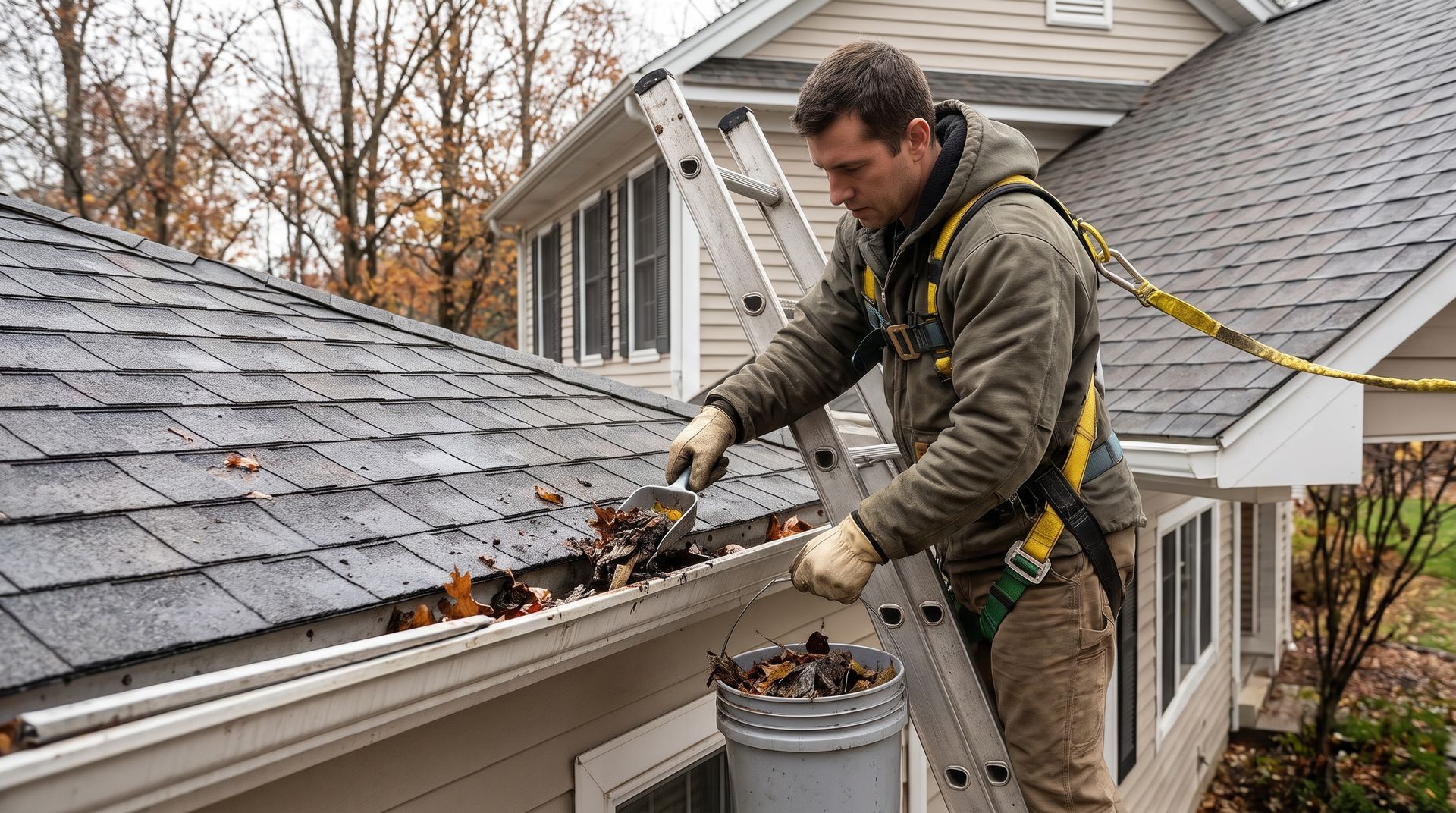
Clean gutters by hand or with a gutter scoop from a stable ladder, and flush them with a hose to see if water flows to the downspouts. Never lean a ladder against a gutter, and skip the job entirely if it means working on a steep or icy roof.
Check the Downspouts
A clean gutter with a blocked downspout still overflows. Run water through each downspout and clear any clogs at the top opening and the bottom elbow.
Look at the Roof Edge
While you are up there, look for drip edge flashing along the roof edge and check whether it extends into the gutter. Look for soft or dark fascia boards, gaps behind the gutter, and peeling paint on the soffit.
Check the Pitch
Gutters should slope slightly toward each downspout. Water that sits in one section after you flush it means the gutter has sagged or was never pitched correctly.
When It Is More Than a Clog
Signs of Damage
Soft or rotted fascia, gutters pulling away from the house, seams that leak even when the gutter is clean, rust or holes, or water stains inside that keep coming back after cleaning.
Fascia and Roof Edge Repairs
When we find rot behind a gutter, the repair usually starts with taking the gutter down, replacing the damaged fascia, and checking the bottom row of roof decking. Adding or correcting drip edge flashing at the same time keeps the next overflow from soaking the new wood. Rehanging the gutter at the right height and pitch finishes the fix.
Repair or Replace?
Small fascia repairs and resealed seams can sometimes extend the life of a gutter system. Widespread rot, repeated sagging, or old sectional gutters with leaking seams usually point toward replacement. Our guide on
when to replace gutters covers the warning signs in detail.
Preventing Gutter-Related Roof Leaks
Regular Cleaning
Most Connecticut homes need gutter cleaning at least twice a year, in spring and late fall. Homes under heavy tree cover often need it more often.
Proper Installation Details
Drip edge flashing that extends into the gutter, gutters hung at the correct height and pitch, and enough downspouts for the roof area all keep water flowing where it belongs. These details are part of every gutter installation we do.
Gutter Guards
Gutter guards can reduce how often gutters need cleaning, especially under oaks and maples. They are not maintenance-free, and some types still clog with pine needles or seeds. Our
fall roof maintenance checklist
includes the gutter and roof checks worth doing before winter.
Get Your Roof and Gutters Checked
If you have stains along your ceilings or walls near the eaves, gutters that overflow every storm, or soft wood along the roof edge, we can find out where the water is really coming from. A free roof inspection covers the roof, flashing, gutters, and roof edge together. If repairs are needed, our roof repair team can fix the problem at its source.
We serve Wolcott,
Waterbury,
Bristol,
Watertown,
Southington,
Torrington, and communities across Central Connecticut. Call Best Way Roofing at (203) 527-8149 or
contact us online. If you are weighing bigger roof work this season, see our guide on
whether you can replace a roof in winter.
Frequently Asked Questions
Frequently Asked Questions
Frequently Asked Questions
Frequently Asked Questions
Can clogged gutters cause roof leaks?
Yes. Clogged gutters overflow behind the gutter and soak the roof edge, fascia, and soffit, and in winter they help ice dams form. Both can lead to water inside the house near the eaves.
How do I know if a leak is from my gutters or my roof?
Leaks along exterior walls, at the tops of windows, or near the eaves often start at the gutters. Leaks in the middle of a ceiling or around chimneys, vents, and skylights usually point to the roof.
Can clogged gutters cause ceiling leaks?
They can, especially in winter. Ice dams that form in clogged, frozen gutters push water under shingles, and it often appears as ceiling stains near exterior walls.
How often should gutters be cleaned in Connecticut?
At least twice a year, in spring and after the last leaves fall in late fall. Homes surrounded by oaks, maples, or pines may need more frequent cleaning.
Does homeowners insurance cover damage from clogged gutters?
It depends on your policy. Insurers often treat damage from neglected maintenance differently than sudden events, so review your policy and talk with your agent about specific coverage.
Recent Posts