

7 Signs Your Roof Was Damaged Over Winter And What To Do
Winter can be hard on Connecticut roofs. Snow, ice, wind, rain, clogged gutters, and freeze-thaw cycles can all expose weak spots in your roofing system. Best Way Roofing works with homeowners across Litchfield, New Haven, and Fairfield Counties, so we know how quickly small winter roof problems can turn into spring leaks if they are ignored.
The short answer: your roof may have winter damage if you notice missing or lifted shingles, granules in your gutters, ceiling stains, damaged flashing, sagging gutters, attic moisture, or signs of ice dam damage. Some issues are easy to spot from the ground. Others require a professional roof inspection.
Below are the most common signs to look for after winter and what you should do next.
Why Winter Weather Can Damage Your Roof
Connecticut winters can put your roof through a lot in a short period of time. A roof may look fine from the street, but snow, ice, and wind can create hidden damage that shows up later during spring rain.
Snow Adds Weight To The Roof
Heavy snow puts added weight on your roof. A newer, properly installed roof should be built to handle normal winter conditions, but older roofs or roofs with existing damage may be more vulnerable.
Snow can also hide damaged shingles, weak flashing, clogged gutters, and other problem areas until the weather warms up.
Ice Dams Can Push Water Under Shingles
Ice dams form when snow melts on the warmer parts of your roof and refreezes near the colder edges. This creates a ridge of ice that blocks water from draining properly.
When that water has nowhere to go, it can back up under the shingles and leak into the attic, insulation, ceilings, or walls.
Freeze-Thaw Cycles Can Open Small Gaps
During winter, water can melt during the day and freeze again at night. When water gets into small cracks or gaps, it expands as it freezes.
Over time, this can make small roof problems worse. Loose shingles, cracked flashing, worn sealant, and weak roof penetrations can all become more serious after repeated freeze-thaw cycles.
Wind Can Lift Shingles And Flashing
Winter storms can bring strong wind. Wind can lift shingles, loosen ridge caps, damage flashing, and expose areas where water can enter.
This type of damage is not always obvious from the ground. A shingle may still be on the roof but slightly lifted, which means it can allow water underneath during the next storm.
Sign #1: Missing, Lifted, Or Damaged Shingles
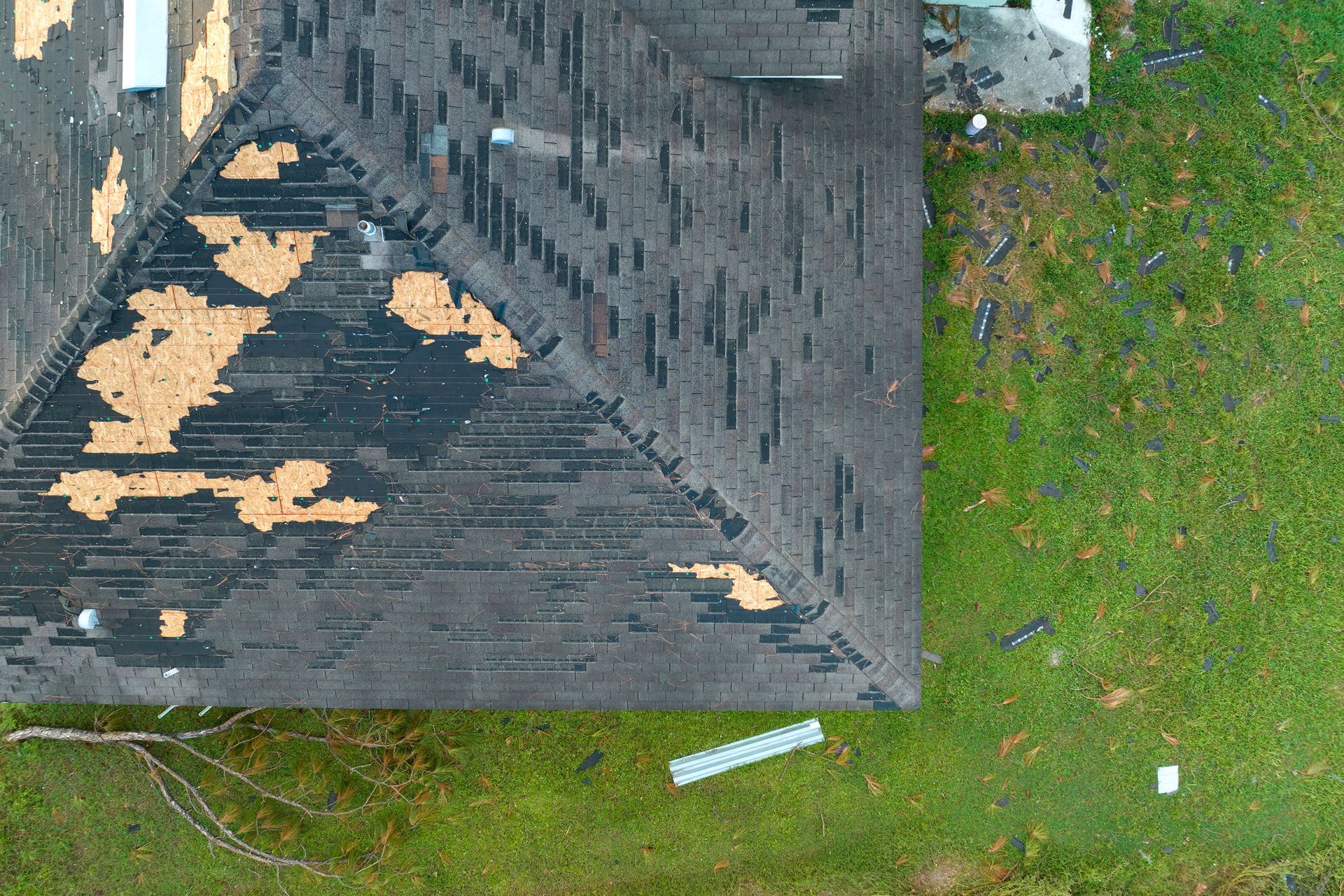
One of the easiest signs of winter roof damage is missing or damaged shingles. You may notice shingles in your yard, bare patches on the roof, or areas that look uneven.
Look for shingles that are:
- Cracked
- Curling
- Buckling
- Missing
- Lifted at the edges
- Loose or out of place
Lifted shingles are especially important to watch for. Even if the shingle has not blown off, it may no longer be sealed correctly. That can allow wind-driven rain to get underneath the roof surface.
Do not climb on the roof to check this yourself. A ground-level inspection is safer, and a professional roofer can confirm whether the damage is minor or more widespread.
Sign #2: Granules In Your Gutters Or Downspouts
Asphalt shingles have protective granules on the surface. These granules help protect the shingles from sun, weather, and impact.
After a rough winter, you may notice granules collecting in your gutters, downspouts, or near the base of your home. A small amount of granule loss can be normal, especially on newer roofs. However, heavy granule loss can be a sign of aging shingles, storm damage, or a roof that is starting to wear out.
You may also see dark or shiny-looking patches on the roof where granules have worn away. Those areas are more exposed and may not protect your home as well as they should.
Sign #3: Ceiling Stains Or Interior Water Spots
Some roof damage shows up inside the home before you notice anything outside. Ceiling stains, wall stains, bubbling paint, or damp drywall may all point to a roof leak.
Common interior signs include:
- Brown or yellow stains on ceilings
- Water spots near exterior walls
- Bubbling paint or peeling drywall
- Musty odors
- Damp insulation
- Dripping during heavy rain
A leak does not always appear directly under the damaged part of the roof. Water can travel along rafters, insulation, or framing before it shows up inside the home.
That is why interior stains should not be ignored, even if they seem small.
Sign #4: Damaged Flashing Around Chimneys, Skylights, And Vents
Flashing is the metal material used around roof penetrations and transitions. It helps direct water away from vulnerable areas.
Flashing is commonly found around:
- Chimneys
- Skylights
- Pipe boots
- Roof vents
- Dormers
- Roof valleys
- Roof-to-wall transitions
Winter weather can loosen flashing, crack sealant, or create small gaps where water can enter. Ice buildup can also put pressure on flashing and make existing problems worse.
If you notice water stains near a chimney, skylight, or bathroom vent, flashing may be the problem.
Sign #5: Sagging, Clogged, Or Damaged Gutters
Your gutters play a major role in protecting your roof and home. When gutters are clogged or damaged, water cannot drain away properly.
After winter, look for gutters that are:
- Sagging
- Pulling away from the fascia
- Overflowing during rain
- Bent or dented
- Filled with shingle granules
- Blocked with leaves, sticks, or debris
Snow and ice can be heavy. If gutters were already loose or clogged before winter, the added weight can make the problem worse.
Poor drainage can also cause water to back up near the roof edge, which increases the risk of leaks, fascia damage, soffit damage, and ice dams.
Sign #6: Attic Moisture, Mold, Or Poor Ventilation Signs
Not every roof problem is visible from the outside. Your attic can reveal important signs of winter roof damage or ventilation issues.
Check your attic for:
- Damp insulation
- Musty smells
- Mold or mildew
- Water stains on wood
- Frost on nails or roof decking
- Daylight coming through the roof boards
Moisture in the attic can come from a roof leak, poor ventilation, or both. In winter, warm air from the living space can rise into the attic. If the attic is not properly ventilated, condensation can form and lead to moisture damage.
A roofing contractor can help determine whether the issue is caused by a leak, ventilation problem, insulation issue, or a combination of factors.
Sign #7: Ice Dam Damage Along The Roof Edge
Ice dams often cause damage near the lower edge of the roof. After the ice melts, the signs may be easier to spot.
Look for:
- Damaged shingles near the eaves
- Water stains near exterior walls
- Loose or sagging gutters
- Icicle damage
- Peeling paint near roof edges
- Wet insulation near the attic perimeter
Ice dam damage can be tricky because the roof may not leak every time it rains. The problem may only show up under certain weather conditions. Still, once water has backed up under the shingles, the affected area should be inspected.
What To Do If You Notice Roof Damage After Winter
If you think your roof was damaged over winter, the best next step is to document what you can safely see and schedule a professional inspection.
Inspect From The Ground First
Start with a safe ground-level inspection. Walk around your home and look at the roof, gutters, siding, attic vents, chimney, and roof edges.
Do not climb onto the roof. Winter damage can make shingles slippery, loose, or unsafe to walk on.
Take Photos Of Visible Damage
If you can see missing shingles, damaged gutters, stains, or debris, take photos. This can help you track the problem and explain what you are seeing to a roofing contractor.
Photos may also be helpful if the damage is related to a storm and you need to speak with your insurance company.
Check The Attic And Ceilings
Go inside and look for signs of moisture. Check ceilings, walls, attic insulation, roof decking, and areas around chimneys or vents.
If you see active dripping, damp insulation, or spreading stains, do not wait. A small leak can turn into a larger repair if water continues getting into the home.
Schedule A Professional Roof Inspection
A professional roofer can safely inspect the parts of the roof that are hard to evaluate from the ground.
A roof inspection after winter may include checking:
- Shingles
- Flashing
- Pipe boots
- Roof vents
- Ridge caps
- Gutters
- Fascia and soffits
- Attic moisture
- Decking condition
- Signs of ice dam damage
This helps determine whether the roof needs a small repair, a more involved repair, or replacement.
Can Winter Roof Damage Be Repaired, Or Do You Need A Replacement?
It depends on the age of the roof, the amount of damage, and the condition of the full roofing system.
A repair may be enough if the damage is isolated. For example, a few missing shingles, a small flashing issue, or one damaged pipe boot may be repairable.
A replacement may make more sense if the roof has widespread shingle damage, repeated leaks, major granule loss, soft decking, or is already near the end of its lifespan.
The goal is not just to stop the current leak. The goal is to understand whether the roof can keep protecting your home through the next season.
How To Help Prevent Winter Roof Damage Next Year
You cannot control Connecticut winter weather, but you can reduce the risk of roof damage with basic maintenance.
Before winter, it helps to:
- Clean gutters and downspouts
- Trim branches hanging over the roof
- Fix loose or missing shingles
- Check flashing around chimneys and vents
- Make sure attic ventilation is working properly
- Schedule a fall roof inspection
- Address small leaks before freezing temperatures arrive
Preventive maintenance is usually easier and less expensive than emergency repairs after water gets inside.
Get Your Roof Checked Before Small Winter Damage Gets Worse
Winter roof damage is not always obvious right away. A few lifted shingles, a small ceiling stain, or granules in the gutter can be an early warning sign that your roof needs attention.
If you noticed possible roof damage after winter, Best Way Roofing can help inspect the issue and explain your options. We serve homeowners throughout Litchfield, New Haven, and Fairfield Counties with roofing repairs, roof replacements, gutters, siding, windows, and related exterior services.
A professional inspection can give you a clearer answer before spring and summer storms make the problem worse.
Frequently Asked Questions
How do I know if snow damaged my roof?
Your roof may have snow damage if you notice missing shingles, sagging areas, new leaks, ceiling stains, damaged gutters, or attic moisture after winter. Heavy snow can also worsen existing roof problems that were already there before the season started.
Can ice dams cause roof leaks?
Yes. Ice dams can cause roof leaks by trapping melting snow near the roof edge. When water cannot drain properly, it can back up under the shingles and leak into the attic, insulation, ceilings, or walls.
Should I get my roof inspected after winter?
Yes, it is a good idea to schedule a roof inspection after winter, especially if your roof is older, you had ice dams, or you notice signs of damage. A spring inspection can catch small issues before they become larger leaks.
What does winter roof damage look like?
Winter roof damage can look like missing shingles, lifted shingles, granules in gutters, damaged flashing, sagging gutters, ceiling stains, attic moisture, mold, or damage along the roof edge from ice dams.
Is winter roof damage covered by insurance?
It depends on your policy and the cause of the damage. Sudden storm-related damage may be covered, while damage from age, poor maintenance, or normal wear and tear may not be. Contact your insurance provider for guidance and have a roofer document the damage.
Recent Posts