

Can You Replace a Roof in Winter? What Connecticut Homeowners Should Know
Best Way Roofing is a Wolcott-based roofing contractor that has served Connecticut homeowners for more than 15 years. We are a GAF Master Elite contractor and a 2026 GAF Master Elite President's Club award winner, registered with the state under HIC #0634957. Owner Luis Aguayza and our crews replace roofs across Central Connecticut through every season, including the cold months when a failing roof cannot wait for spring. This guide explains what winter roofing involves, when it makes sense, and when it is smarter to wait.
Quick Answer: Yes, you can replace a roof in winter in Connecticut, as long as the roof surface is free of snow, ice, and frost and the crew follows cold-weather installation steps. Those steps include storing shingles and leak barriers warm, hand-sealing shingles when it is too cold for their adhesive strips to activate, and tearing off only what can be dried in the same day. Winter replacement is the right call when your roof is leaking or badly damaged. If your roof is aging but still dry, booking ahead for early spring is often just as good.
In This Guide
- Winter Roof Replacement at a Glance: When it makes sense.
- What Changes in Cold Weather: Shingles, sealing, and leak barriers.
- How a Winter Roof Replacement Works: Planning around the weather.
- Pros of Winter Roofing: Scheduling, savings, and protection.
- Risks and Drawbacks: What to weigh.
- Does Winter Installation Affect Your Warranty?: What GAF says.
- When You Should Not Wait: Signs it cannot hold until spring.
- When Waiting for Spring Makes Sense: Planning ahead.
- Preparing Your Home: What to do before install day.
- Schedule a Roof Inspection: Free inspections.
- Frequently Asked Questions: Quick answers.
Winter Roof Replacement at a Glance
| Your Situation | Replace in Winter? | Why |
|---|---|---|
| Active leaks or widespread damage | Yes, as soon as weather allows | Each storm adds damage to decking, insulation, and ceilings |
| Storm damage with an insurance claim | Usually yes, after temporary protection | Prompt repairs limit further damage and keep the claim moving |
| Aging roof that is still dry | Optional | Winter works, but early spring is just as good if you book ahead |
| Roof covered in snow or ice | Wait for a clear stretch | Crews need a dry, clear deck to work safely and correctly |
| Selling the home soon | Often yes | A new roof can help with inspections and buyer confidence |
What Changes When Roofing in Cold Weather
Shingles Get Stiff and Brittle
In its technical guidance on temperature extremes, GAF says there is no practical lower temperature limit for installing fiberglass asphalt shingles as long as appropriate precautions are taken. GAF notes that shingles are easiest to handle above about 40°F. It suggests storing them in a heated area above 70°F for at least 24 hours before use. Cold shingles can crack if they are bent, dropped, or nailed when they are not lying flat.
Seal Strips May Not Activate
Asphalt shingles have adhesive strips that bond each course to the one below. Those strips rely on warmth and sunlight to activate. In cold weather, they may not seal for weeks, which leaves shingles vulnerable to wind. The fix is hand-sealing. GAF's cool-weather guidance calls for quarter-sized dabs of approved asphalt roofing cement under each shingle tab, pressed firmly into place. All GAF shingle and ridge cap instructions include hand-sealing procedures.
Leak Barriers Need Warmth Too
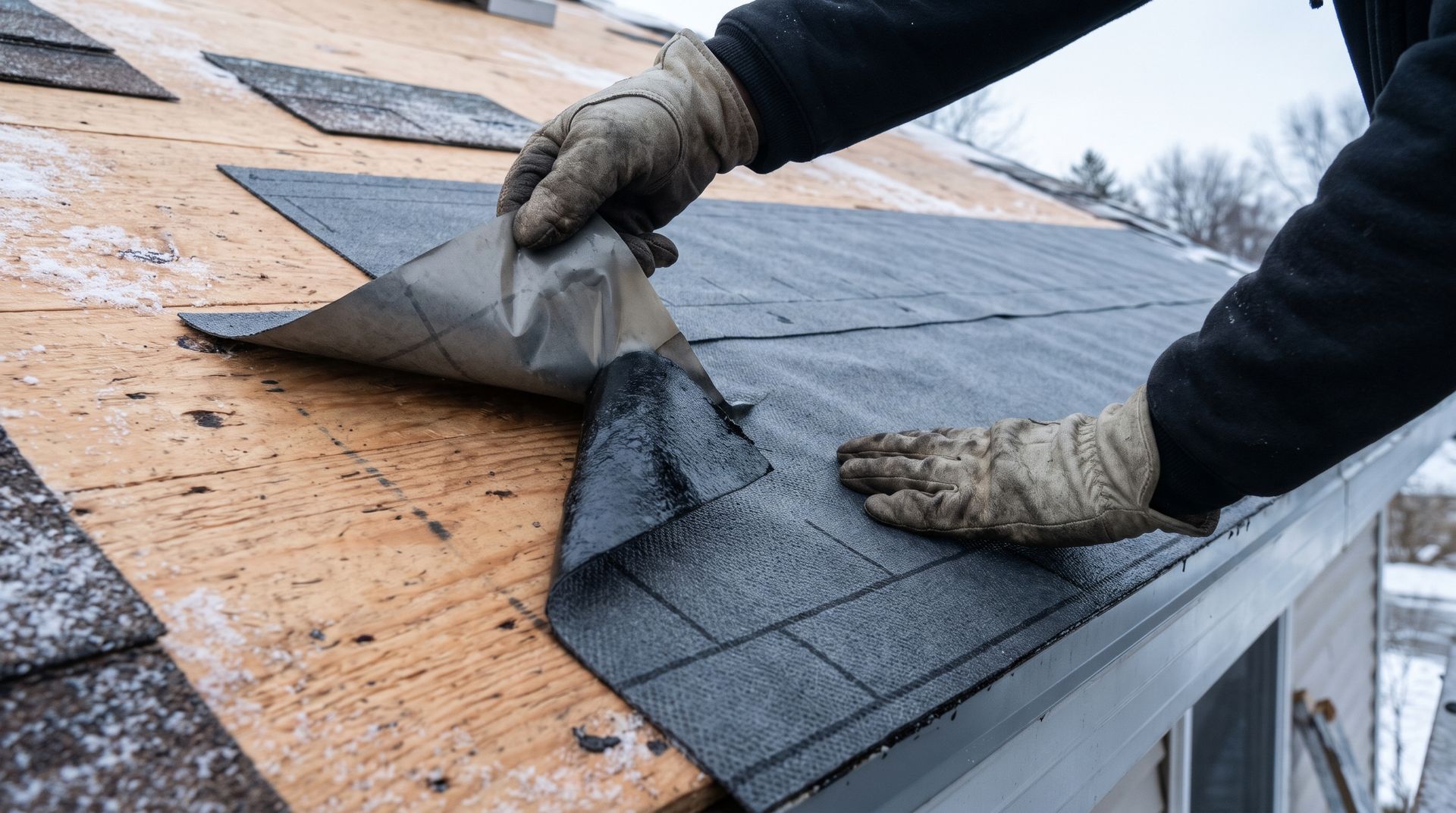
The self-adhering ice and water barrier along the eaves and in valleys is one of the most important parts of a Connecticut roof. GAF's technical guidance on cool-weather installation of its leak barriers says rolls and adhesives must be stored overnight at a minimum of 55°F before use. When the air is below 40°F, the membrane itself must be at least 45°F when it is applied. Crews keep rolls warm and install them immediately after taking them out of storage.
The Deck Has to Be Dry
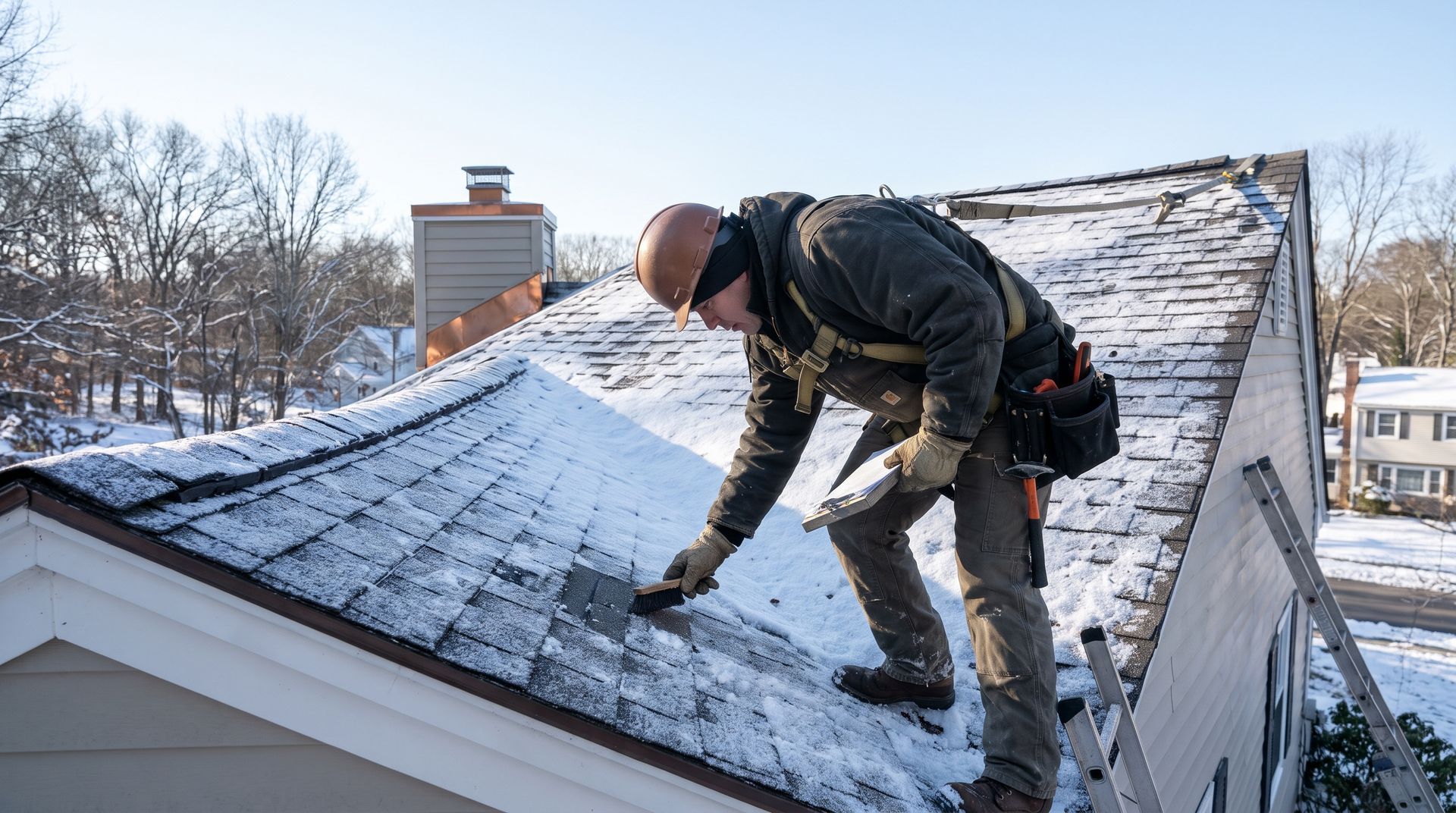
Industry guidance from the Asphalt Roofing Manufacturers Association advises waiting until the roof surface is free of ice and frost. Underlayment and leak barriers will not bond properly to a wet, frosty deck, and moisture trapped under a new roof can cause problems later.
Shorter Days
In December, Connecticut gets only about nine hours of daylight. Crews tear off only as much as they can dry in with underlayment before the light goes and the temperature drops. That often means a winter roof takes an extra day compared to the same job in September.
How a Winter Roof Replacement Works
On a winter job, the forecast sets the schedule. Tear-off only starts when the next several hours are dry and the exposed deck can be fully covered before sundown. These are the added steps:
- Watching the forecast closely, and scheduling tear-off for clear, dry days with no precipitation expected.
- Storing shingles and leak barriers warm so they are flexible and adhere properly on install day.
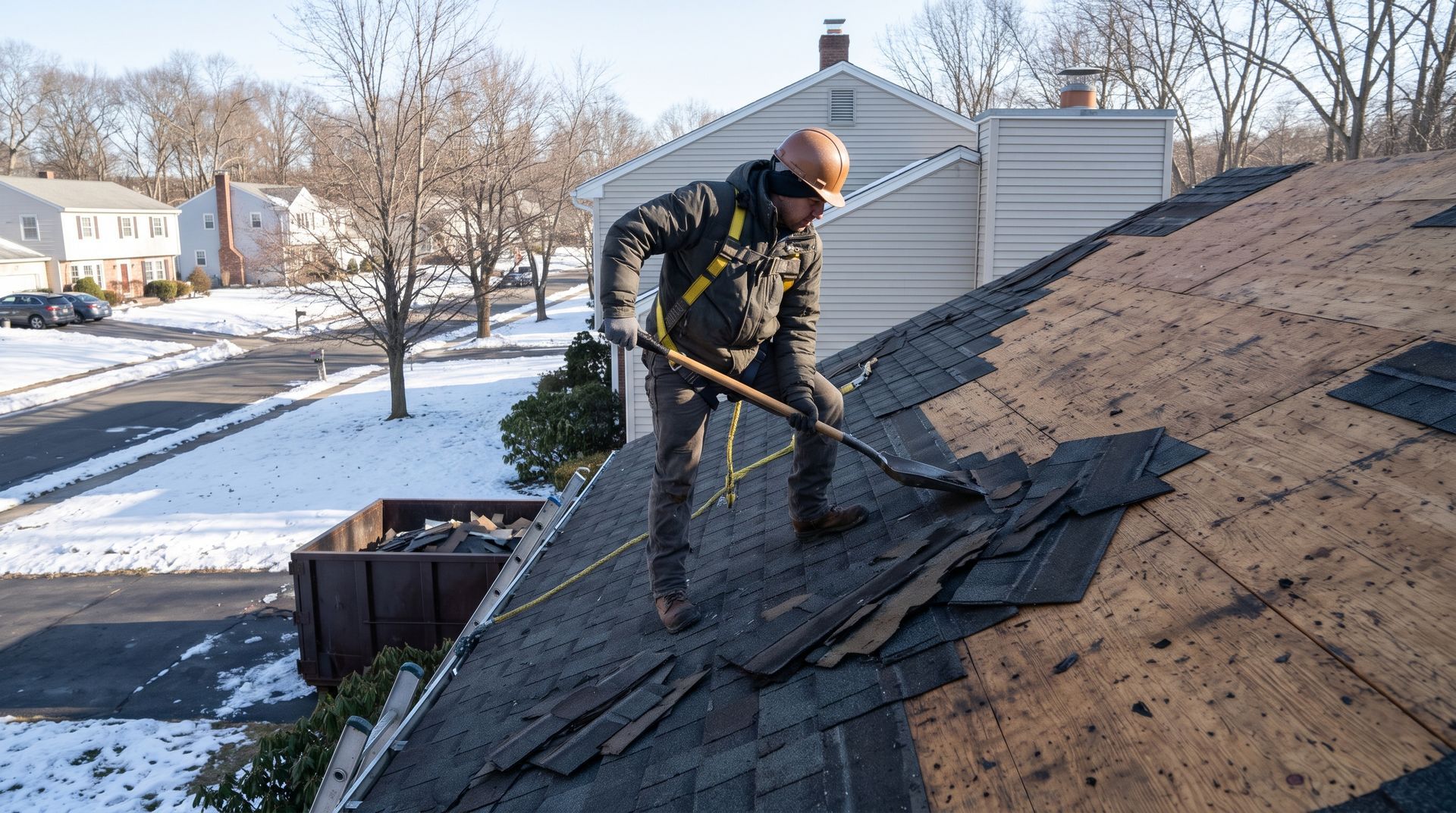
- Tearing off in sections, so every exposed area is covered with underlayment before the crew leaves.
- Clearing frost and moisture from the deck before any leak barrier goes down.
- Hand-sealing shingles and ridge caps with approved roofing cement when temperatures are too low for the seal strips.
- Handling materials carefully to avoid cracking stiff shingles.
- Running the magnetic sweep thoroughly, since nails are harder to spot in snow.
Our guide on
how long a roof replacement takes explains the normal timeline and how weather stretches it.
Pros of Replacing Your Roof in Winter
Easier Scheduling
Fall is the busiest season for roofers in Connecticut. In the colder months, scheduling is usually more flexible, and the wait for a start date is often shorter.
Potential Savings
The slower months, from November through March, can sometimes bring savings on labor, as we cover in our guide to what impacts the cost of a new roof in CT. Savings depend on the project and the weather, so treat them as a possibility rather than a guarantee.
Stopping Damage Sooner
A leaking roof does not pause for winter. Every snowmelt and every ice dam lets more water into the decking, insulation, and ceilings. Replacing it now can prevent repairs that would otherwise add to the bill in spring.
Better Protection for the Rest of the Winter
A new roof gets fresh ice and water barrier along the eaves and valleys. For homes that have been fighting ice dams, that added protection starts working immediately.
Code-Required Ice Protection From Day One
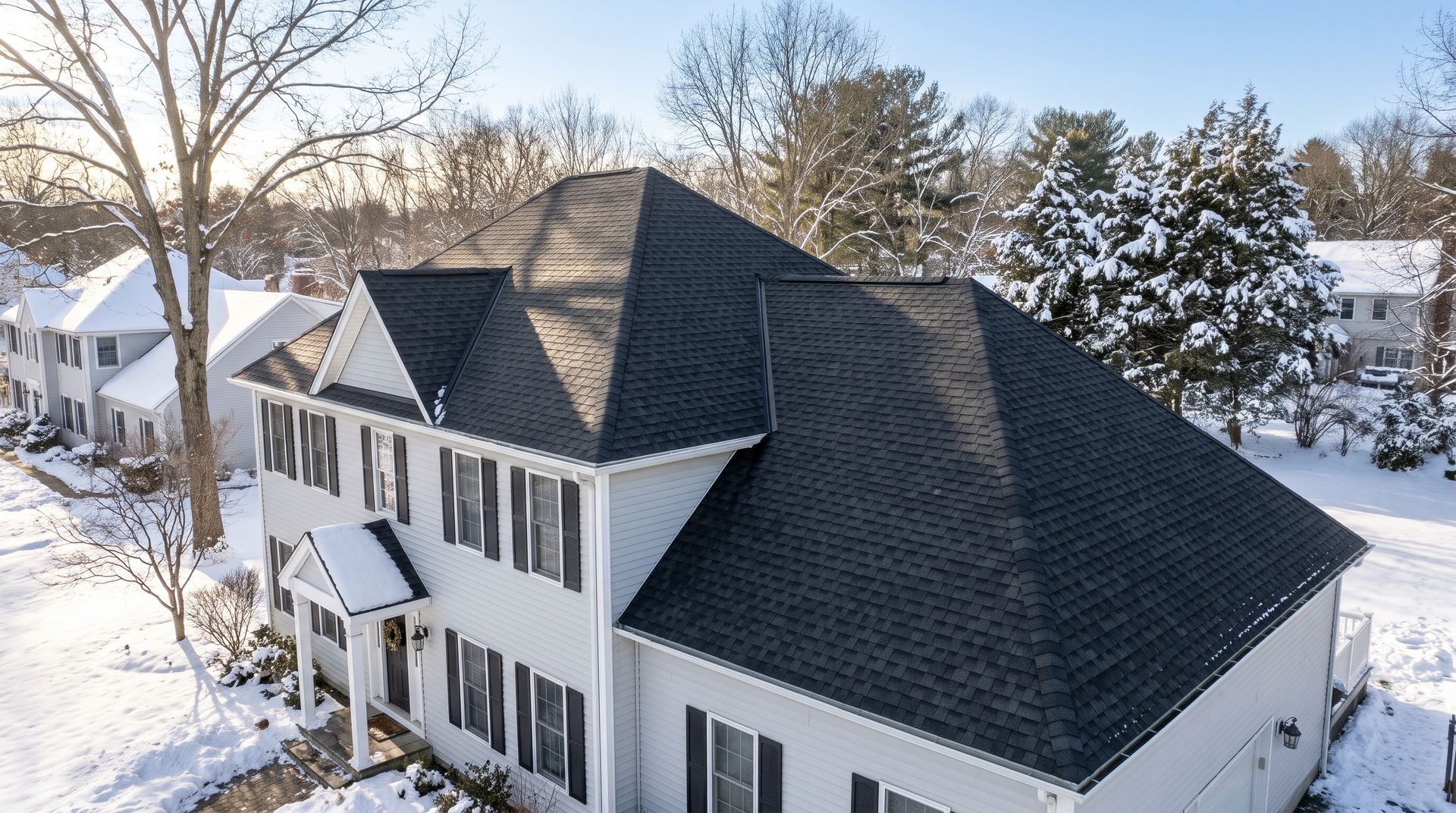
Connecticut's building code calls for ice barrier protection along the eaves on homes across the state. On a winter install, that membrane goes down before the shingles, so the most leak-prone part of the roof is protected through the rest of the season.
Risks and Drawbacks of Winter Roofing
Weather Delays
Snow, sleet, freezing rain, and frost can push a start date or pause a job. A good contractor will not start a tear-off with bad weather in the forecast.
Longer Timelines
Shorter days, careful handling, and hand-sealing all add time. A job that would take one day in fall may take two in January.
Skipped Cold-Weather Steps
The biggest risk is a contractor who treats a winter roof like a summer roof. Shingles that are not hand-sealed can lift in the first strong wind, and leak barriers applied to a cold, frosty deck may not bond. Ask any contractor how they handle cold-weather installs before you sign. Our list of questions to ask a roofer is a good starting point.
What a Winter Roof Looks Like Until Spring
A roof installed in January will not look exactly like one installed in July for a few weeks. Shingles that were hand-sealed are bonded at the cement dabs, but the factory seal strips finish bonding on their own once the sun warms the roof in spring. You may also see a few loose granules in the gutters, which is normal for any new roof. We are happy to check back on winter installs once warmer weather arrives so you can see that everything has sealed down.
Does Winter Installation Affect Your Warranty?
What GAF Says
GAF's technical guidance states that the temperature at the time of installation does not affect its Shingle & Accessory Limited Warranty. GAF's cool-weather installation guidance adds that the warranty is not affected as long as all application instructions are followed, including cold-weather steps such as hand-sealing.
Why Installer Quality Still Matters
Manufacturer warranties assume the roof was installed to the manufacturer's instructions. That is why choosing a certified installer who follows those instructions in the cold matters as much as the season. Our
warranty information page explains the coverage options available on our roofs, along with our 15-year workmanship warranty.
When You Should Not Wait for Spring
Water that gets in during a Connecticut winter freezes and thaws inside the roof assembly, so a small leak in December can spread into decking and insulation by March. Schedule an inspection now if you see any of these:
- Active leaks showing up as ceiling stains, drips, or wet insulation.
- Missing or torn shingles after a storm, especially near ridges and edges.
- Sagging areas that could point to rotted decking.
- Repeated ice dam leaks along exterior walls, which can also point to clogged gutters causing roof leaks.
- Damaged flashing around chimneys, skylights, or vents.
If full replacement has to wait for a dry stretch, a temporary repair or tarp can protect the house in the meantime. Our
storm damage and
roof repair teams handle those emergencies. For help deciding between the two, see our guide on
roof repair vs. replacement.
When Waiting for Spring Makes Sense
If your roof is near the end of its life but still keeping water out, there is no reason to rush. Winter is a great time to get inspections, compare estimates, choose a shingle color, and secure a spot on the schedule for early spring. Spring calendars fill quickly, so homeowners who plan in January and February usually get the start dates they want.
Our guide on
how long a roof lasts can help you judge how much life your current roof has left.
How to Prepare Your Home for a Winter Roof Replacement
Clear Access
Keep the driveway plowed and clear for the dumpster and material delivery, and move vehicles out of the way. Clear snow from walkways around the house so the crew can work safely.
Protect the Inside
Tear-off creates vibration. Cover belongings stored in the attic and take down fragile items from walls on the top floor.
Plan for Noise and Pets
Roofing is loud. Plan for pets and anyone working from home, and let neighbors know about the work.
Schedule a Roof Inspection This Winter
Whether your roof needs attention now or you are planning for spring, a free roof inspection is the best place to start. We will tell you whether your roof can wait, what a winter install would involve, and what it will cost. Learn more about our roof replacement process, or explore financing options.
We serve homeowners in Wolcott,
Waterbury,
Bristol,
Southington,
Cheshire,
Naugatuck, and across Litchfield, New Haven, and Fairfield Counties. Call Best Way Roofing at (203) 527-8149 or
contact us online. Our office is at 102 Wolcott Road in Wolcott.
Frequently Asked Questions
Frequently Asked Questions
Frequently Asked Questions
Frequently Asked Questions
Can you replace a roof in winter in Connecticut?
Yes. Roofs can be replaced in winter when the roof surface is clear of snow, ice, and frost and the crew follows cold-weather steps like warm material storage and hand-sealing shingles.
What is the coldest temperature to install shingles?
GAF says there is no practical lower temperature limit for its asphalt shingles when proper precautions are taken, though shingles are easiest to handle above about 40°F. Leak barriers have their own temperature requirements.
Will shingles seal in cold weather?
Not quickly on their own. Shingle seal strips need warmth and sunlight to activate, so in cold weather installers hand-seal each shingle with approved roofing cement.
Is it cheaper to replace a roof in winter?
It can be. Labor savings are sometimes available in the slower months, but weather delays and extra cold-weather steps can offset them. Savings vary by project.
Does winter installation affect my roof warranty?
According to GAF, the temperature at installation does not affect its Shingle & Accessory Limited Warranty, as long as all application instructions, including cold-weather steps, are followed.
Recent Posts