

Asphalt Shingle Roof: Pros, Cons, and What to Expect
At Best Way Roofing, we've installed and replaced hundreds of asphalt shingle roofs across Connecticut, and we know firsthand what works well and where the limitations are. With years of hands-on experience in CT's demanding climate, we're here to give you a straight, honest look at this popular roofing material so you can make the right call for your home and budget.
Are Asphalt Shingles a Good Roofing Choice? (Quick Overview)
For most Connecticut homeowners, asphalt shingles are a smart, well-rounded choice. They're affordable, widely available, easy to install, and come in a broad range of styles and colors. They perform reliably in most weather conditions and are simple to repair when something goes wrong.
That said, they're not perfect. Asphalt shingles have a shorter lifespan than premium materials like metal, tile, or slate, and they can take a beating in severe weather. If you're looking for the longest possible lifespan and don't mind paying more upfront, other materials may be worth considering.
Asphalt shingles are a great fit for homeowners who:
- Want a durable, attractive roof at a reasonable price
- Plan to stay in their home for 15 to 30 years
- Need a relatively quick installation with minimal disruption
- Want flexibility in style and color options
They may not be the best fit if:
- You want a 50-year or lifetime roofing solution
- Your home is in an area with frequent severe hail or extreme wind
- You're prioritizing eco-friendly or sustainable roofing materials


What Is an Asphalt Shingle Roof?
Asphalt shingles are flat, overlapping panels made from a fiberglass or organic mat base coated with asphalt and topped with ceramic granules. The granules protect the shingle from UV rays and water while giving it texture and color. They're installed in horizontal rows starting at the roof's edge and working upward, creating a layered barrier that sheds water away from the structure below.
Asphalt shingles are the most common residential roofing material in the United States. They're popular because they strike a practical balance between cost, performance, and appearance. A complete asphalt shingle roofing system includes the shingles themselves, an underlayment for added water protection, flashing around penetrations like chimneys and vents, and ridge cap shingles along the peak.
Types of Asphalt Shingles
3-Tab Shingles
3-tab shingles are the most basic and budget-friendly option. They have a flat, uniform look with three evenly spaced cutouts along the bottom edge, which creates the appearance of three separate shingles. They're thinner and lighter than other options, which keeps costs down, but they also have a shorter lifespan and less wind resistance. Most 3-tab shingles are rated for winds up to 60 to 70 mph and last around 15 to 20 years.
Architectural (Dimensional) Shingles
Architectural shingles, also called dimensional shingles, are the most popular option for residential roofs today. They're made from multiple layers of material bonded together, which creates a thicker, more textured appearance that mimics the look of wood shake or slate at a fraction of the cost. They're more durable than 3-tab shingles, with better wind resistance and a longer lifespan of 25 to 30 years. Best Way Roofing installs GAF architectural shingles, which are among the most trusted products in the industry.
Luxury (Premium) Shingles
Luxury or premium shingles are the top tier of asphalt roofing. They're the thickest, heaviest, and most durable option, designed to closely replicate the look of natural slate or cedar shake. They offer enhanced impact resistance, better wind ratings, and longer warranties, often 30 years or more. The tradeoff is a higher upfront cost, though still well below natural slate or tile.
Pros of Asphalt Shingle Roofing
Affordability and Cost-Effectiveness
Asphalt shingles cost significantly less than metal, tile, or slate roofing, both in materials and labor. For most homeowners, this is the single biggest deciding factor. You get solid, reliable protection without a major financial stretch, and repairs are inexpensive compared to premium materials.
Easy Installation and Repair
Asphalt shingles are straightforward to install, which keeps labor costs down and reduces the time your home is exposed during a re-roof. Individual shingles can also be replaced without disturbing the rest of the roof, so repairs are quick and targeted.
Wide Variety of Styles and Colors
Asphalt shingles come in dozens of colors and profiles, from flat neutrals to bold earth tones to designs that mimic wood or slate. That range makes it easy to match your roof to your home's exterior and neighborhood, which can have a real impact on curb appeal and resale value.
Reliable Performance in Most Climates
Modern asphalt shingles are engineered to hold up well in a wide range of conditions. They're rated for wind speeds, fire resistance, and in some product lines, impact resistance. For Connecticut's mix of hot summers, cold winters, and periodic storms, a quality architectural shingle performs reliably when properly installed.
Cons of Asphalt Shingle Roofing
Shorter Lifespan Compared to Premium Materials
This is the main tradeoff. Asphalt shingles last 20 to 30 years on average, while metal roofs can last 40 to 70 years, and slate can last a century or more. If you're looking for a roof you'll never have to replace again, asphalt probably isn't it.
Susceptibility to Weather Damage
Asphalt shingles can be vulnerable to hail impact, high winds, and rapid temperature swings. Connecticut's freeze-thaw cycles in particular can accelerate wear, especially on older shingles that have already lost some granule coverage. Wind uplift can lift or remove shingles if they weren't properly fastened or if the adhesive strips have weakened with age.
Maintenance and Wear Over Time
Asphalt shingles require periodic attention. Granule loss, cracking, and curling are normal signs of aging, but they accelerate when ventilation is poor, when debris sits on the roof for long periods, or when the roof doesn't receive basic maintenance. Algae and moss growth are also common in Connecticut's humid climate and can stain the surface if left untreated.
Environmental Considerations
Asphalt shingles are petroleum-based, which raises environmental concerns during manufacturing and at end-of-life disposal. Most old shingles end up in landfills, though some recycling programs exist. If sustainability is a priority, metal or recycled-content roofing materials may be a better fit.
How Long Do Asphalt Shingle Roofs Last?
Lifespan varies by shingle type and the conditions the roof faces. Here's a general breakdown:
| Shingle Type | Average Lifespan | Wind Rating |
|---|---|---|
| 3-Tab | 15–20 years | 60–70 mph |
| Architectural (Dimensional) | 25–30 years | 110–130 mph |
| Luxury (Premium) | 30–40+ years | 110–150 mph |
Beyond shingle type, several factors affect how long your roof actually lasts:
- Attic ventilation - Poor airflow traps heat and moisture, which degrades shingles from below and significantly shortens their lifespan.
- Installation quality - Improper fastening, incorrect overlap, or shortcuts during install lead to early failure.
- Connecticut's climate - Freeze-thaw cycles, ice dams, and summer heat all put stress on roofing materials over time.
- Maintenance - Regular inspections, gutter cleaning, and prompt repairs extend the roof's useful life considerably.
What to Expect During Installation
Roof Tear-Off and Preparation
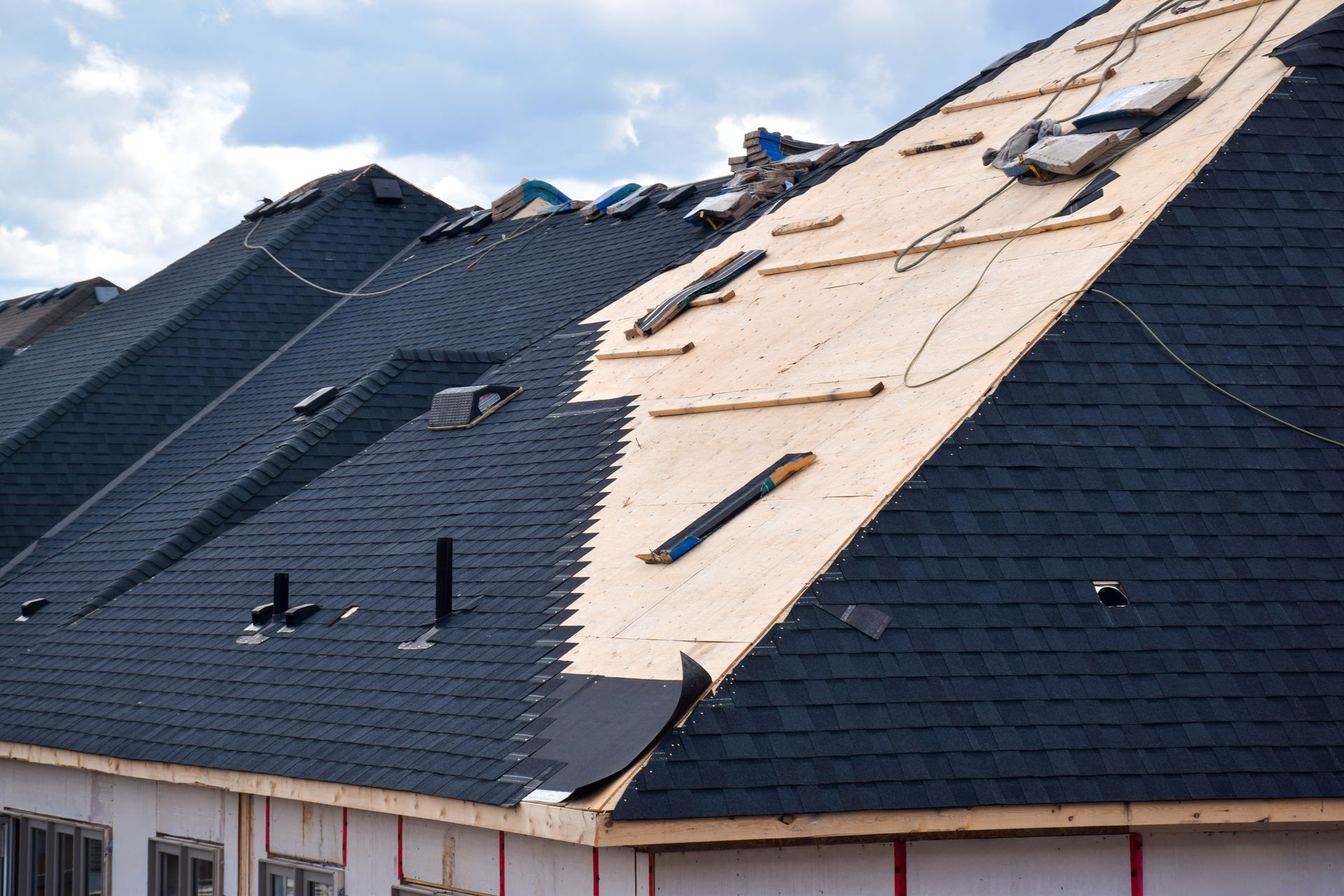
Most re-roofing projects begin with tearing off the existing material down to the roof deck. This step lets the crew inspect the decking for rot, water damage, or soft spots that need to be addressed before new shingles go on. Skipping a proper tear-off, or layering new shingles over old ones, can hide underlying problems and void warranties.
Underlayment and Waterproofing
Before any shingles are installed, the deck is covered with an underlayment layer that acts as a secondary barrier against water infiltration. In Connecticut, ice and water shield is applied along the eaves and in valleys, which is critical for preventing ice dam damage during winter.
Shingle Installation Process
Shingles are installed starting at the eave and working upward in overlapping courses. Proper nail placement, consistent overlap, and correct alignment all matter. Ridge cap shingles are installed last along the peak, and flashing is set around all penetrations. Ventilation components like ridge vents are integrated into the system to support proper airflow.
Cost of an Asphalt Shingle Roof
Asphalt shingle roofing is priced per roofing square, where one square equals 100 square feet of roof surface. Several factors affect the total project cost:
- Roof size and pitch - Steeper roofs take longer to work on and require more safety equipment, which increases labor costs.
- Shingle grade - Architectural shingles cost more than 3-tab; luxury shingles cost more than architectural.
- Tear-off and decking repairs - If the existing deck has damage, repairs add to the total.
- Flashing and accessories - Chimney flashing, skylights, and complex roof geometry all add cost.
- Location and labor rates - Connecticut labor costs are higher than the national average.
For a precise estimate on your home, Best Way Roofing offers free inspections and honest, itemized quotes with no pressure.
Maintenance and Common Issues
Routine Maintenance Tips
Asphalt shingles don't require a lot of day-to-day attention, but a few habits make a real difference:
- Schedule a professional inspection each spring and fall
- Keep gutters clean so water drains away from the roof edge properly
- Trim overhanging branches that deposit debris and shade the roof, which encourages moss and algae
- Address any loose or missing shingles right away rather than waiting
Signs of Wear and Damage
Watch for these warning signs that your asphalt roof needs attention:
- Missing shingles - Any gap in coverage lets water in and should be repaired promptly.
- Granule loss - Bare patches on shingles or heavy granule buildup in gutters signal the shingles are nearing the end of their life.
- Curling or cupping - Edges that lift or cup inward are a sign of age, heat damage, or ventilation issues.
- Cracking - Brittle, cracked shingles no longer shed water effectively.
- Interior water stains - Staining on ceilings or walls often traces back to a shingle or flashing issue at the roof level.
Asphalt Shingles vs. Other Roofing Materials
Not sure how asphalt stacks up against other options? Here's a quick comparison:
| Roofing Material | Avg. Lifespan | Relative Cost | Best For |
|---|---|---|---|
| Asphalt Shingles | 20–30 years | $ | Budget-conscious, most climates |
| Metal Roofing | 40–70 years | $$–$$$ | Longevity, energy efficiency |
| Tile (Clay/Concrete) | 40–50 years | $$$ | Warm climates, Mediterranean style |
| Slate | 75–100+ years | $$$$ | Premium performance, historic homes |
| Wood Shake | 20–30 years | $$ | Rustic aesthetics, moderate climates |
Asphalt wins on upfront cost and installation simplicity. Metal wins on lifespan and long-term value. Tile and slate offer exceptional durability but come with significant cost and structural weight requirements. For the majority of Connecticut homeowners weighing budget, performance, and appearance together, asphalt remains the most practical choice.
Final Thoughts: Is an Asphalt Shingle Roof Right for Your Home?
If you want a dependable, attractive roof that won't break the budget, asphalt shingles are hard to beat. They've been the go-to residential roofing material for decades for good reason: they work well, look great, and can be installed and repaired by any qualified roofer. In Connecticut's climate, a quality architectural shingle installed properly and maintained regularly will give you decades of reliable service.
If you're weighing your options or aren't sure which shingle type makes sense for your home, the team at Best Way Roofing is happy to walk you through it. We'll take a look at your current roof, talk through what we recommend, and give you a clear, no-pressure estimate.
Schedule your free roof inspection today and let's figure out the right solution for your home.
Frequently Asked Questions About Asphalt Shingle Roofs
How much does an asphalt shingle roof replacement cost in Connecticut?
Costs vary based on roof size, pitch, shingle grade, and any repairs needed to the decking. Connecticut's higher labor rates also factor in. The best way to get an accurate number is a free, on-site inspection and quote. Best Way Roofing provides free roof inspections with no obligation.
What is the difference between 3-tab and architectural shingles?
3-tab shingles are flat, lightweight, and budget-friendly, but they have a shorter lifespan and lower wind resistance. Architectural shingles are thicker, more durable, and carry a better warranty. For most homeowners, the modest price difference makes architectural shingles the smarter long-term value.
Can asphalt shingles handle Connecticut winters?
Yes, when properly installed with ice and water shield along the eaves and adequate attic ventilation, asphalt shingles hold up well through Connecticut winters. The key risks are ice dams and freeze-thaw stress, both of which are manageable with the right installation practices.
How do I know if my asphalt shingle roof needs to be replaced?
Signs that replacement may be needed include widespread granule loss, curling or cracking across multiple sections, a roof age of 25 years or more, persistent leaks, or visible sagging. A professional inspection gives you a clear, unbiased answer. Visit our roof repair page to learn more about what to expect.
Do asphalt shingles come with a warranty?
Yes. Most architectural shingles include a manufacturer's warranty covering defects, often for 30 years or more. Some premium product lines offer lifetime limited warranties. Workmanship warranties from the contractor cover installation quality separately. Best Way Roofing is a GAF Master Elite contractor, which gives our customers access to enhanced warranty coverage. Learn more on our warranty info page.
Recent Posts